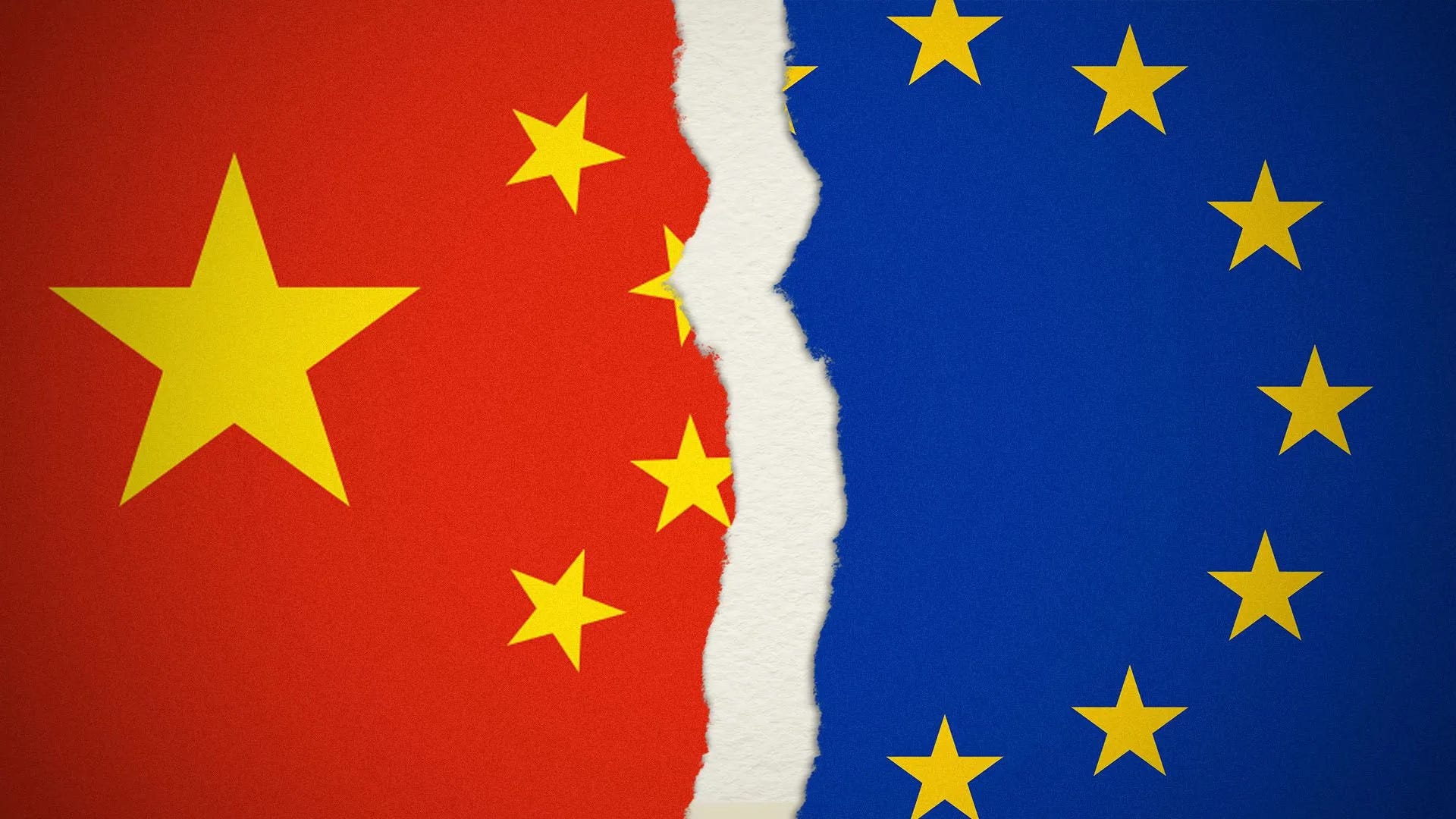
The US and Russia are Dismantling Europe: Why an Alliance with China is the Only Way Out
The Alliance of Despair.

Consider this a simulation. A purely hypothetical scenario attempting to piece together the events of recent weeks to peer just a little further down the road. It is merely one possible timeline, but with every new statement from world leaders, it looks less like fiction and more like the only remaining path.
January 2026 has finally ripped off the masks. The events of the last few weeks--from the forced regime change in Venezuela to direct threats against Denmark’s territorial integrity regarding Greenland--are not random, isolated crises. They are elements of a new reality in which the European Union has been cast in the role of the prey.
The final straw was the publication of the new “US National Security Strategy,” which de facto legalized interference in the electoral processes of allied nations. This is no longer diplomacy. This is a declaration of hybrid war against the current European elites, aimed at replacing them with loyal populists.
Brussels is now caught in a trap. The only exit lies in a direction Europe has been too terrified to look for decades.
1. The “Hammer and Anvil” Mechanism: The US-Russia Tandem
The fatal mistake of the Europeans was the belief that the US would protect them from the Russian threat. The reality of 2026 proves the opposite: Washington has become the primary beneficiary of Russian pressure on Europe.
The scheme operates with cynical precision:
Russia (The Hammer): Generates constant tension on the borders and sows internal chaos within the EU through hybrid warfare.
The US (The Anvil): Instead of offering aid, Washington exploits this weakness to twist Europe’s arm economically (sanctions, tariffs, asset seizures) and politically (promoting “their” candidates in elections).
The goal of this tandem is the dismantling of the EU as a sovereign subject. Trump wants a collection of weak vassals; Putin wants a zone of chaos.
2. Anatomy of the Alliance of Despair: The Quid Pro Quo
Europe has no time to build its own army. It needs geopolitical “cover” here and now to avoid disintegrating during the upcoming election cycles. The only player capable of balancing US pressure and restraining Russia is China.
This situational alliance won’t look like friendship. It will be a hard-nosed barter:
A. Tech in Exchange for Leverage
Washington is trying to strangle China with a technological blockade. The EU possesses exactly what Beijing critically needs--advanced technologies (lithography, robotics, avionics)--which are currently blocked by US sanctions.
The Deal: The EU lifts the embargo on technology transfers to the PRC.
The Consequence: This shatters the US strategy of containment. For Trump, this becomes a critical problem that forces him to negotiate with Brussels rather than dictate terms.
B. The “Chinese Shield” Against Russian Aggression
Today, Russia is totally dependent on China economically. Beijing is the only capital whose calls the Kremlin cannot afford to ignore.
The Deal: The EU allows Chinese capital into critical infrastructure (ports, energy, logistics).
The Consequence: A Russian attack on Europe automatically becomes an attack on Chinese money. Beijing will be forced to curb Putin’s aggressive impulses to protect its investments. The EU effectively “hires” China as a security guarantor against Russia.
C. Financial Autonomy
The Deal: A shift to direct settlements in Euro and Yuan, creating a shared payment infrastructure bypassing SWIFT.
The Consequence: This gives EU governments the resources to stabilize their economies before elections, independent of decisions made by the IMF or the US Federal Reserve.
Conclusion
A situational alliance with the PRC is a risk. But in conditions where the US openly declares its intent to change regimes in European capitals, and Russia acts as the kinetic instrument in this game, Brussels has no choice.
Between guaranteed political destruction at the hands of an “ally” (the US) and an attempt to find protection with a systemic rival (China), the instinct of self-preservation will force Europe to choose the latter.
The only question is whether they can make the move before the “Hammer and Anvil” snap shut for good.