
The Paradox of the Iran Crisis: How a U.S. Geopolitical Blunder Might Just Save the Global Order

While many continue to view American power through rose-colored glasses out of sheer habit, willfully ignoring Washington’s objective struggles in Iran, the most crucial consequences of this war are already taking shape. The main paradox here is that this very crisis—sparked by incompetent decision-making—might actually be saving the world from a much worse scenario.
Here are four non-obvious outcomes of what is happening right now:
1. The Collapse of the American Omnipotence Myth
The campaign in Iran is acting as a cold-blooded crash test. It demonstrates to experts and adversaries alike that the U.S. is objectively unprepared for modern warfare. The paradigm of global dominance via carrier strike groups is looking obsolete, and Washington is rapidly losing its aura of an “insurmountable force,” along with its customary place at the apex of the global hierarchy.
2. A Silent Trump Card for Beijing
The exposure of American military vulnerabilities hands China the perfect unspoken argument. If a remote war in the Middle East is causing the U.S. this much trouble, the prospect of fighting a war with limited resources off the coast of a foreign mainland over Taiwan looks not just like a massive gamble, but like something entirely unthinkable. Beijing doesn’t even need to make loud declarations—the results of the Iranian campaign speak for themselves.
3. The Greenland “Fuse” and the Salvation of the EU
Bogged down in Iran with its image badly shaken, the U.S. can hardly afford another, far more destructive geopolitical adventure: the attempted takeover of Greenland. Why is this so critical? Because such a move by the former hegemon would have shattered the European Union from within. The EU would have drowned in a fatal conflict between those urging to “swallow” the aggression to preserve the American security umbrella, and those demanding a harsh response. Averting this internal rupture is perhaps the greatest, albeit accidental, positive outcome of the current situation.
4. Europe is Waking Up
The European Union’s de facto refusal to support Washington in the Iranian campaign is not merely a diplomatic pause. Watching U.S. impulsiveness play out, the EU is fundamentally rethinking its relationship with the Americans. This crisis is becoming a powerful catalyst for Europe’s shift toward genuine military and strategic autonomy.
Incompetence and exhaustion in one part of the globe have accidentally acted as a structural brake for the entire system. The old world order is changing rapidly, but perhaps it is exactly this crisis that is keeping it from collapsing under the worst possible scenario.
P.S. On the objective unreadiness of the U.S. for modern warfare (a footnote for those who love counting military budgets).
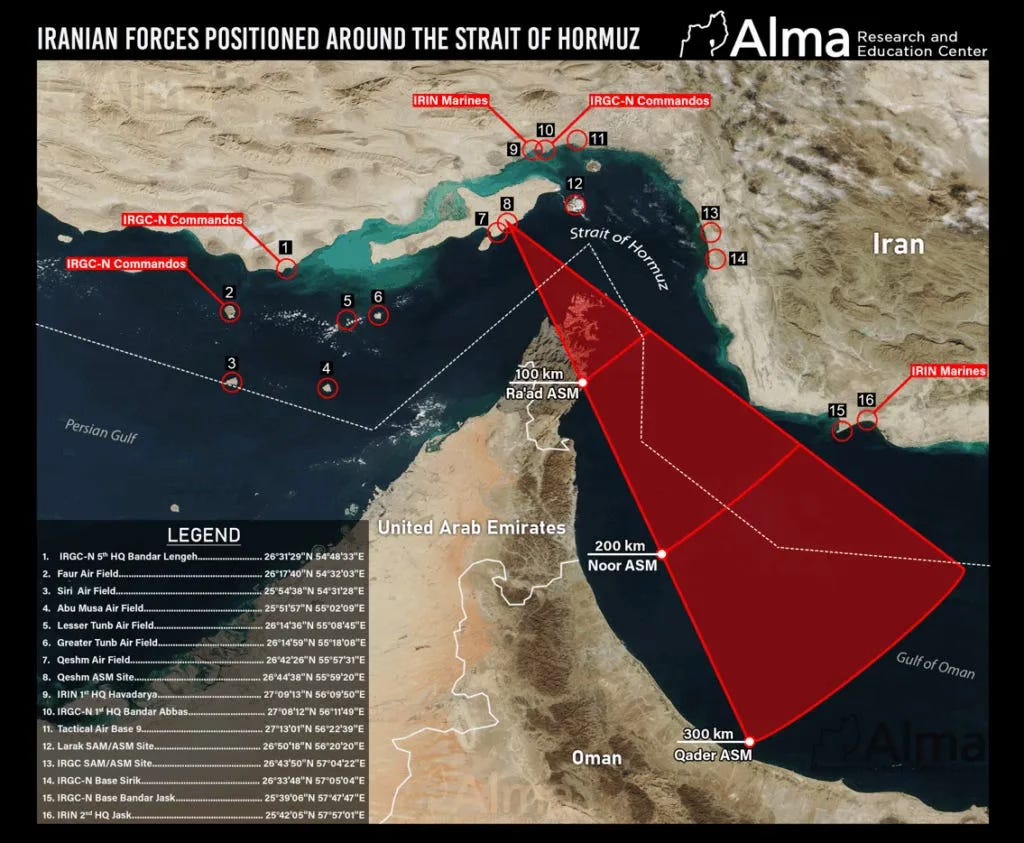
If anyone fails to understand why the crisis in Iran is a catastrophe for the Taiwan scenario, just do a simple extrapolation. Iran is a regional player with relatively limited technology. Yet even there, armed with years of established bases in the Middle East, the American remote-warfare machine is frankly stalling.
Now transfer those same methods to the shores of Taiwan. There, the U.S. will have to operate within China’s dense Anti-Access/Area Denial (A2/AD) envelope, under a rain of hypersonic missiles, drone swarms, and with logistics stretched across an entire ocean. If force projection is crumbling now, in the South China Sea these tools will simply burn up in the very first days. Beijing is left to simply watch as its main adversary single-handedly proves to Taiwan that no rescue will come from across the ocean
.