
Defending Europe in the New Reality: Why the US Role in NATO is Systemically Overrated

/// The Illusion of America as Europe’s Strategic Backbone
Public discourse remains deeply shaped by the assumption that the United States is the indispensable guarantor of European survival. However, objective geopolitical analysis demonstrates otherwise: the preservation of NATO is a critical requirement for maintaining the global status of the US itself, not an act of charity for the sake of European borders. Without the military bases, logistical hubs, and airspace of European allies, Washington loses the ability to rapidly project power into the Middle East, Africa, and Eurasia, automatically sliding back toward the role of a predominantly Western Hemisphere power.
Meanwhile, the myth of the American land “shield” in Europe fails a basic logistics test. US ground forces on the continent are a structurally overrated factor. Their composition is designed strictly for a tripwire function or localized expeditionary tasks. Any serious, high-intensity ground conflict will fall exclusively on the shoulders of European armored divisions, European artillery, and European mobilization reserves.
The only domain where Europe retains a truly critical dependence on the US lies beyond kinetic weapons: Command, Control, Communications, Computers, Intelligence, Surveillance, and Reconnaissance (C4ISR). The global network of military satellites, early warning systems, data links, strategic targeting, and nuclear deterrence—this is the real foundation keeping Europe on the American hook. The US provides not the physical defense of the continent, but a monopoly on battlefield information.
/// The End of Power Projection: The European Context
The modern geopolitical reality requires a strict reassessment of our security toolkit. The problem is not that American naval platforms have entirely lost their functionality, but that their ability to determine the outcome of a defense in the European theater has proven significantly lower than their political prestige implies.
For decades, the Carrier Strike Group (CSG) was considered a universal security guarantee. Yet, for the European land theater, the role of US aircraft carriers is systemically overrated. Europe itself already functions as a dense logistical and basing space. In a potential European war, the carrier component might retain auxiliary functions, but it is unequivocally not the central pillar upon which the continent’s defense ultimately rests.
/// The Economics of Deterrence and the Technical Imperative of A2/AD
The new realities, laid bare by the US operation against Iran, serve as an empirical demonstration of the physics and economics of modern conflict. The Iranian campaign confirmed a strategic truth: the initiative has shifted to the defender. Cheap assets can reliably seal off maritime and land chokepoints. Today, naval security architecture faces three objective barriers within the A2/AD (Anti-Access/Area Denial) framework:
The Math of Saturation Attacks: A carrier’s defense relies on escort destroyers with a strictly limited payload (around 90–96 VLS cells), which cannot be reloaded at sea. A combined swarm of a hundred cheap drones and dozens of cruise missiles is guaranteed to deplete this inventory. Furthermore, firing a $4 million interceptor at a $50,000 drone means rapid logistical bankruptcy for the defender.
Kinematic Vulnerability: Unlike cruise missiles, Anti-Ship Ballistic Missiles (ASBMs) strike from the upper atmosphere at hypersonic speeds (Mach 4–8). The kinetic energy of such an impact can disable a massive warship even without warhead detonation, while the reaction time for air defenses shrinks to mere seconds.
Geographic Incompatibility: Potential conflict zones in Europe (the Baltic, Black, and Mediterranean Seas) are enclosed waters. Here, large surface vessels enter the continuous strike zone of modern coastal missile systems. Land-based air defense systems and missile batteries hold a critical advantage: dispersion and terrain masking. Destroying a camouflaged launcher in a forest is significantly harder than tracking a 300-meter metal platform on the water.
/// The Realist’s Bottom Line: Technological Autarky
The notion of “the West” as a monolithic bloc has run its course. The United States views the European theater through the lens of its own interests in containing China. Therefore, recognizing the structural overvaluation of the American military presence changes the paradigm: European capitals must compensate not for a lack of American infantry or ships, but for a lack of their own information infrastructure.
For the EU and the UK, the only rational course is to build a true “Fortress Europe,” where the priorities are:
Land forces and deeply echeloned Air/Missile Defense (IADS) equipped with mass-produced, economically viable strike capabilities.
Technological autarky in the defense sector, including the localization of microchip production.
A sovereign C4ISR architecture: deploying an independent satellite constellation (e.g., the IRIS² project) and implementing independent data exchange protocols.
European security must rely on its own distributed resources, rather than waiting for chaotic political processes across the ocean or the limitations of an expeditionary fleet to paralyze the continent’s operational capacity.
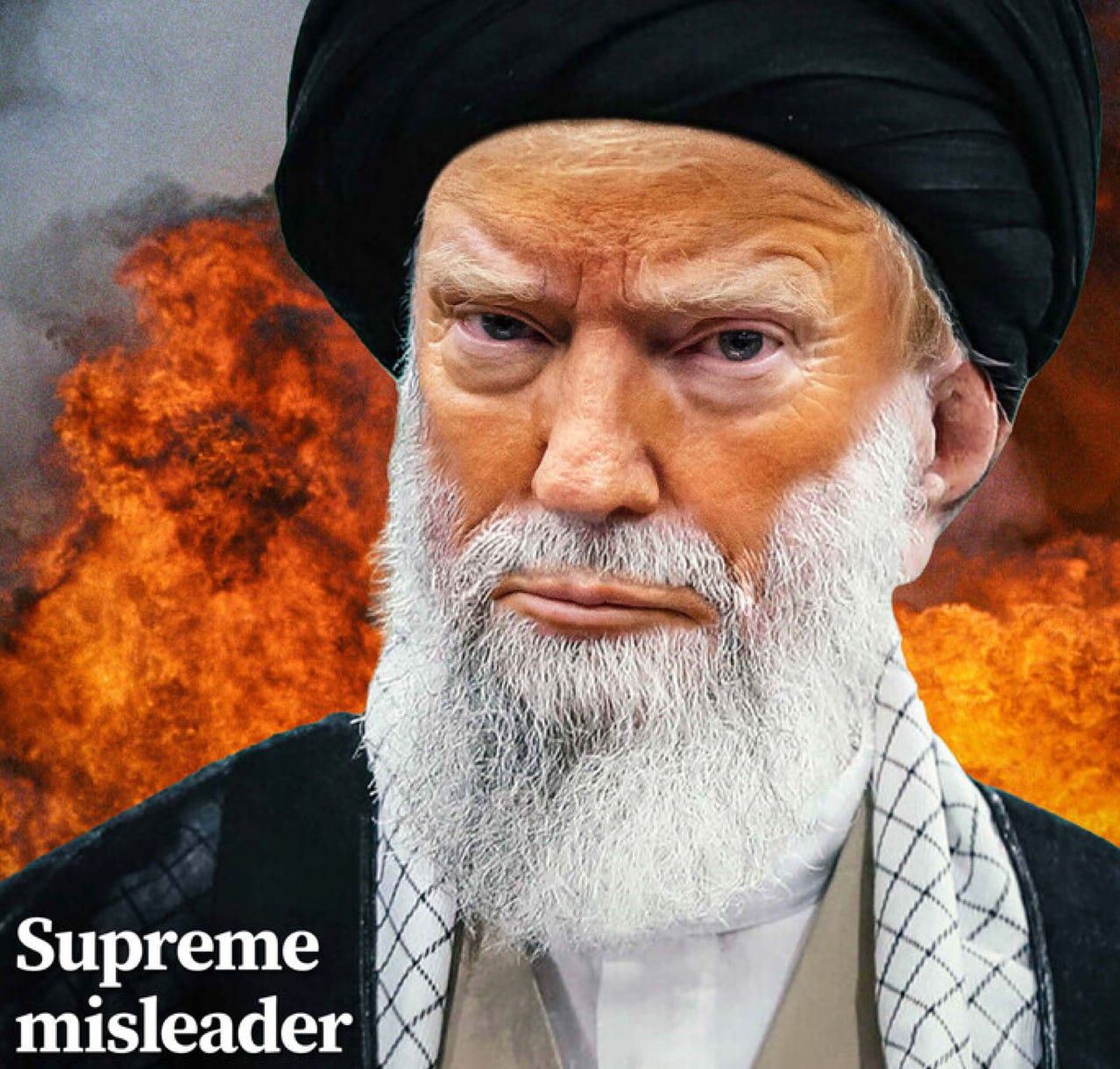
The paradox of contemporary geopolitics is that the United States has become a far greater generator of chaos and a threat to the global order than the PRC. This unpredictability has suddenly exposed a highly uncomfortable truth: Washington has spent years artificially engineering and fueling the confrontation between Europe and China.
Because American and European interests are fundamentally different, the myth of a "united front" merely served as a tool to keep the EU on a short leash. The endgame here is purely extractive: to sever Europe from alternative partners and supply routes in order to continue parasitizing its markets.
Most importantly, this manufactured friction has facilitated the unhindered siphoning of the continent's most valuable asset: European human and intellectual capital. Under the guise of an "alliance," Washington is systematically bleeding an economic competitor dry, forcing Europe to subsidize the maintenance of American hegemony with its own brains and intellectual property.